
CNHRA PERSON RECORD · CNHRA-P-229675
Teng Biao
Born
Unknown
Occupation
Human rights lawyer and legal advocate
Role
Human Rights Defender
Record ID
CNHRA-P-229675
Visual Records
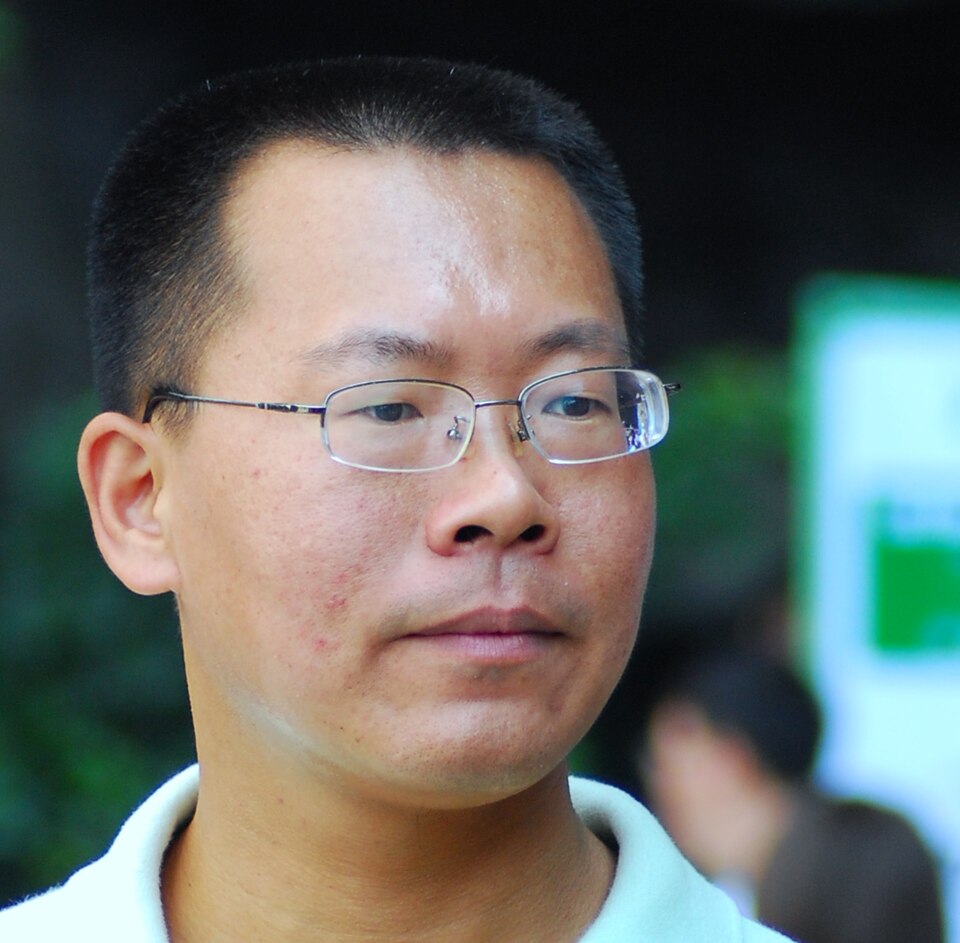
Teng Biao at the Chinese Blogger Conference in November 2009, according to the photographer.
Biography
Teng Biao is a human rights lawyer and legal advocate. Following Sun Zhigang’s death in 2003, he joined Xu Zhiyong and Yu Jiang in seeking constitutional review of custody-and-repatriation regulations. In The Last Ten Years, Xu recalls sending the proposal on May 14 that year.[4]
Teng earned a law doctorate at Peking University, taught at China University of Political Science and Law, and co-founded Gongmeng and China Against the Death Penalty. His legal work and research concern criminal justice, capital punishment, human rights, social movements and transnational repression.[6]
Teng continued teaching and research abroad. FAU’s biography lists a visiting professorship at Chicago, a human-rights scholar appointment at Hunter College, and fellowships at NYU, Harvard, Yale and Princeton’s Institute for Advanced Study. His work also encompasses civil-society organizations, death-penalty abolition and transnational repression.[6]
He continued rights-defense and democracy advocacy. During his disappearance from contact in 2011, UN Special Procedures sent an urgent appeal seeking information including his place of detention. Human Rights Watch reported his reappearance on April 29 after sixty-nine days.[3][1]
On June 28, 2017, he testified before the US Congressional-Executive Commission on China, describing restrictions on legal practice, teaching and travel, secret detention and pressure on his wife and daughter. He also discussed organizing China Human Rights Lawyers Day.[2]
On November 19, 2025, Teng spoke at FAU’s human rights colloquium on digital surveillance and Chinese civil society, with Daniel Sprick as discussant.[7]
Case Summary
On March 2, 2011, UN Special Procedures issued urgent appeal CHN 5/2011 concerning detentions and disappearances from contact, including Teng Biao and Jiang Tianyong. Human Rights Watch reported Teng’s reappearance on April 29 after sixty-nine days.[3][1]
In his 2017 hearing testimony, Teng described repeated secret detention, professional restrictions and pressure on relatives. One passage dates a seventy-day detention to “2001,” differing from contemporaneous 2011 accounts.[2]
Timeline
2003
Undertakes rights advocacy
In his signed 2017 testimony, Teng identifies 2003 as the beginning of his human rights and democracy work.[2]
2003-05-14
Joint constitutional-review recommendation mailed, according to Xu
In The Last Ten Years, Xu recalls mailing a recommendation with Yu Jiang and Teng Biao on May 14 seeking constitutional review of custody-and-repatriation rules. This is a participant’s later recollection, not the original petition or an official review decision.
Xu Zhiyong’s account places the submission within public debate after Sun Zhigang’s death: three legally trained participants sought to challenge custody and repatriation through regulatory review. The episode connects Teng’s early advocacy with a wider institutional issue. Submission, official consideration and later regulatory change are separate matters.[4]
2010
Co-founds China Against the Death Penalty
The university profile records his co-founding role and work against the death penalty.[6]
2011-03-02
Joint urgent appeal seeks detention location
CHN 5/2011 transmits allegations of detention, disappearance and intimidation, naming Teng and Jiang Tianyong among others. It records Teng’s detention location as unclear. This is the communication date, not the detention-start date.[3]
2011-04-29
Reappears after loss of contact
Human Rights Watch records Teng’s reappearance on April 29 after sixty-nine days without contact.
Before his reappearance, the UN’s March 2 urgent appeal, CHN 5/2011, had raised lawyers’ removal, unknown whereabouts and intimidation with the government. Human Rights Watch described 69 days out of contact. His 2017 testimony revisited secret detention but contains a conflicting year in one passage; this milestone remains anchored to the contemporaneous 2011 record.[1][3][2]
2017-06-28
Testifies at CECC lawyers hearing
His signed testimony describes restrictions on practice, teaching and travel, secret detention, pressure on relatives and organizing China Human Rights Lawyers Day.
The testimony connects his experience with the professional environment for lawyers, discussing restrictions on teaching, legal work and travel, pressure on his wife and daughters, and the organization of China Human Rights Lawyers Day. It is his retrospective account and a record of advocacy, rather than an independent adjudication of every allegation.[2]
2025-11-19
Speaks at FAU on digital surveillance
The university’s event account describes discussion of digital technology, state control and civil society.[7]
Related Events
2011
Teng Biao: Reported Disappearance in 2011 and Later Testimony
滕彪2011年失联与后来公开证言
CNHRA-E-696275
2015-07-09
The 709 Crackdown in 2015 and Ten Years of Follow-up
2015年709律师打压及十年后续
CNHRA-E-044886
2003-03-17
Sun Zhigang’s Custody, Death and Subsequent Responses, 2003
2003年孙志刚被收容、死亡及后续处理事件
CNHRA-E-795231
Documents
Sources
- [1]
CNHRA-S-809513Human Rights Watch
Evidence location: Paragraph naming Teng Biao, his reappearance on April 29 and the 69-day disappearance.
- [2]
CNHRA-S-056631Teng Biao / CECC
Evidence location: Hearing heading and section 1; apparent 2001/2011 discrepancy is not silently corrected.
- [3]
CNHRA-S-479144United Nations
Evidence location: A/HRC/18/51, printed page 61: CHN 5/2011 dated March 2, 2011; Teng Biao and Jiang Tianyong.
- [4]
CNHRA-S-656375China Change
Evidence location: PDF pages 33–35, The Last Ten Years, sections 1–2: petition and recollections of visiting Linyi.
- [5]
CNHRA-S-396643Wikimedia Commons
Evidence location: File description, creator, licensing section and photograph; webpage dates are not treated as capture dates.
- [6]
CNHRA-S-855288Friedrich-Alexander-Universität Erlangen-Nürnberg
Evidence location: University biography, opening paragraphs: previous appointments, fellowships and research.
- [7]
CNHRA-S-174538FAU CHREN
Evidence location: Opening paragraph: November 19 colloquium; topic and speaker profile.