
CNHRA PERSON RECORD · CNHRA-P-102542
Liao Yiwu
Visual Records
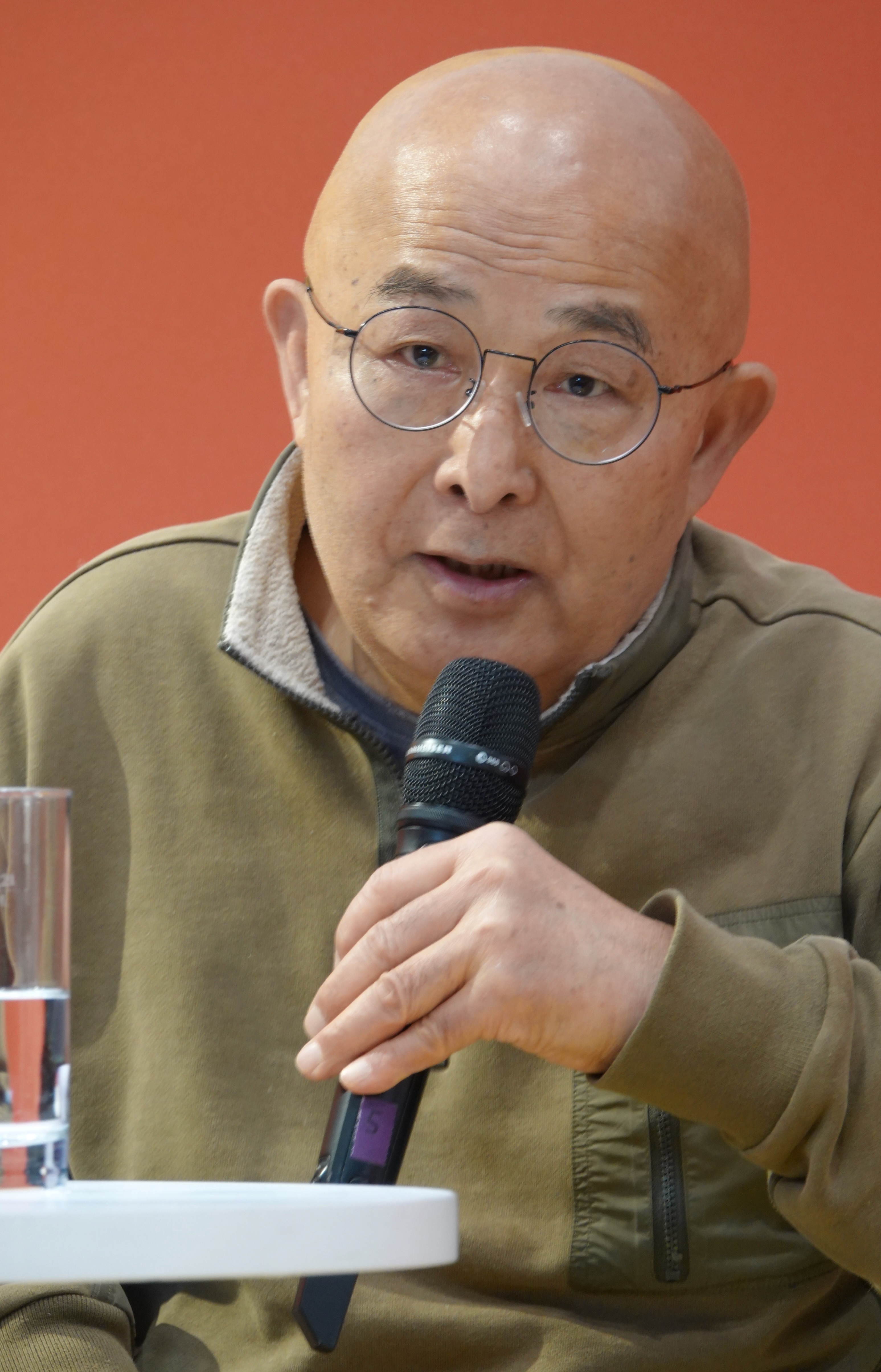
Liao Yiwu at a PEN Germany event at the 2023 Leipzig Book Fair.
Biography
Liao Yiwu records ordinary lives through poetry, oral history and nonfiction. He wrote and recorded Massacre in 1989 and participated in related film work; imprisonment and life after release became central to later writing.[2][3]
After prison he supported himself through street music and casual work, interviewing beggars, funeral workers, teachers and others rarely heard publicly. A 2001 collection was later banned in China; overseas editions included The Corpse Walker.[2]
After the 2008 Sichuan earthquake he interviewed survivors about bereavement, corruption and demands for justice. Published in Hong Kong the following year, these accounts joined his prison recollections in preserving personal testimony.[2]
He received the German Book Trade Peace Prize in 2012 and wrote the introduction to Liu Xia’s bilingual Empty Chairs in 2015, helping another restricted writer reach readers.[2][4]
Case Summary
After arrest in 1990 and four years’ imprisonment, Liao was released in 1994 to poverty and manuscript seizures. Versions of his prison recollections were confiscated in 1995 and 1997, forcing repeated rewriting.[2][3]
Repeatedly prevented from attending literary events abroad, he visited Germany in 2010 but faced renewed travel restrictions the next year. After reaching Germany via Vietnam in July 2011, the rewritten prison account could be published.[2]
Timeline
1989
Writes Massacre
Liao wrote and recorded Massacre, circulated it informally and worked on related film material.[2]
1990
Arrested and sentenced
Liao Yiwu was arrested in connection with his poem Massacre and related writing and video work. He later received four years in prison. The available record supports the year.[2]
1994
Released
1995-10-10
Author recounts manuscript confiscation
In his translated account, Liao dates the seizure of a nearly completed prison manuscript and other papers to this day and describes subsequent rewriting.[3]
1997
Prison memoir manuscript confiscated again
Following the 1995 seizure, a rewritten prison memoir was confiscated again in 1997. He rewrote it once more, ultimately producing the version published abroad.[2]
2001
Oral-history collection published in China
Liao published interviews with people from marginalized social settings, recording individual lives across occupations and circumstances. Sales were later prohibited, while overseas editions continued circulating.[2]
2008
Interviews Sichuan earthquake survivors
Liao interviewed Sichuan earthquake survivors about their experiences, concerns over corruption and demands for justice. The interviews were published in Hong Kong the following year.[2]
2008
The Corpse Walker published in English
Twenty-seven selected oral-history interviews were published in the United States, bringing accounts of ordinary lives to more readers.[2]
2010-09
First permitted visit to Germany
After repeated travel restrictions, Liao was first permitted to visit Germany for literary events in Berlin.[2]
2011-05
Again prevented from leaving China
According to the German Book Trade Peace Prize’s official biography, Liao was again barred from leaving China in May. Two months later, he traveled to Germany via Vietnam.[2]
2011-07
Leaves via Vietnam for Germany
After repeated travel obstacles and a permitted German visit in 2010, Liao left via Vietnam. The Peace Prize biography connects departure with publication of his prison memoir.[2]
2012-10-14
Receives German Book Trade Peace Prize
Liao received the Peace Prize at Frankfurt’s Paulskirche. The awarding body highlighted his recording of marginalized lives and persistence in rewriting confiscated work.[2]
2015-11-03
Contributes an introduction to Liu Xia’s Empty Chairs
Liu Xia’s bilingual Empty Chairs appeared with Liao’s introduction, bringing poems, photographs and the author’s persistence under restriction to readers.[4]
Related Events
Sources
- [1]
CNHRA-S-776109Wikimedia Commons
Evidence location: File description, source, creator and licensing sections.
- [2]
CNHRA-S-764057German Book Trade Peace Prize
Evidence location: Biographie Liao Yiwu: writing, 1990–1994 imprisonment, departure in 2011 and 2012 award. Biographical date: 1958.; Additional locator: 2010-09 — First permitted visit to Germany.; Additional locator: 2011-05 — Again prevented from leaving China; Additional passages concerning 1989, 1990, 1994, 1997, 2001, 2008, 2010-09, 2011-05, 2011-07, 2012-10-14. Reference notes: Accounts differ on birth month/day and arrest month; the record uses supported precision without inferring exact dates.
- [3]
CNHRA-S-155515Ohio State University MCLC Resource Center
Evidence location: First-person translated account of January 1994 release, 1995 manuscript confiscation and rewriting; Additional passages concerning 1994, 1995-10-10.
- [4]
CNHRA-S-836831Graywolf Press
Evidence location: Publication date, translators, introduction credit, and description of thirty years of poetry and photographs.