
CNHRA PERSON RECORD · CNHRA-P-974097
Liu Xiaobo
Visual Records
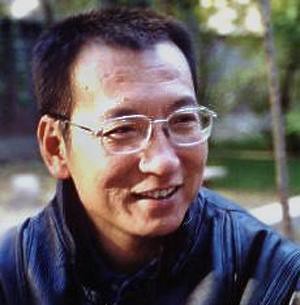
Liu Xiaobo.
Biography
Liu Xiaobo (December 28, 1955–July 13, 2017) was a Chinese writer, literary critic and scholar. He received a doctorate in 1988, taught at Beijing Normal University, and held visiting academic appointments in Europe and the United States. In 1989 he returned from the United States to join the Tiananmen protests. In early June he joined Hou Dejian, Zhou Duo and Gao Xin in a hunger strike and participated in negotiations for the withdrawal of protesters remaining in the Square. He was subsequently detained; in 1991 he was found guilty of counterrevolutionary propaganda and incitement but exempted from criminal punishment.[1][4][11]
In 1996, Liu was assigned three years of re-education through labor in connection with political expression. He helped draft Charter 08 in 2008, calling for constitutional reform, democracy and human-rights protections. Police took him away that December and formally arrested him in June 2009. In December 2009, the Beijing No. 1 Intermediate People’s Court sentenced him to eleven years in prison and two years’ deprivation of political rights for inciting subversion of state power. Liu and his counsel argued that the essays and charter were protected civic expression, not crimes. The appellate court upheld the sentence.[4][3][5][6][14][9]
Liu was awarded the 2010 Nobel Peace Prize while imprisoned and could not attend the ceremony in Norway. He received medical parole for advanced liver cancer in 2017 and died in Shenyang on July 13.[1][7][8][12]
Case Summary
Police took Liu Xiaobo away on December 8, 2008, shortly before Charter 08 was made public. Court records show residential surveillance beginning December 9 and formal arrest on June 23, 2009. Prosecutors charged him with inciting subversion of state power, relying principally on six essays published between 2005 and 2007 and his involvement in drafting, publishing and gathering signatures for Charter 08.[3][9]
The Beijing No. 1 Intermediate People’s Court heard the case on December 23, 2009. Liu denied guilt; counsel argued that the writings fell within freedom of expression and challenged aspects of the evidence and procedure. On December 25 the court found him guilty and imposed eleven years’ imprisonment and two years’ deprivation of political rights. The Beijing High People’s Court upheld the judgment in February 2010. Liu was granted medical parole for advanced liver cancer in 2017 and died in Shenyang on July 13.[5][6][9][8][12]
Timeline
1989
Participation in the Tiananmen Protests
In the spring of 1989, student-led demonstrations in Beijing drew support from residents and intellectuals. Liu, then a visiting scholar at Columbia University in the United States, returned to Beijing and joined discussions and activities in Tiananmen Square. On June 2 he began a hunger strike with Hou Dejian, Zhou Duo and Gao Xin, amid mounting fears of military intervention. During the night of June 3–4, troops used force in Beijing and people were killed. Participant accounts and subsequent studies describe efforts by Liu and others to negotiate with troops and remaining students so that people still in the Square could withdraw. Violence and casualties also occurred elsewhere in Beijing; no reliable figure establishes how many casualties the negotiations prevented.
Liu was detained after the crackdown. Amnesty International dates his arrest to June 6, while a Reporters Without Borders biography gives June 8. He spent approximately nineteen to twenty months in Qincheng Prison. A later appellate judgment states that in 1991 he was found guilty of counterrevolutionary propaganda and incitement but exempted from criminal punishment: that judicial disposition and his actual period in custody are distinct facts. In his statement during the 2009 prosecution, Liu described June 1989 as a turning point in his life, reflected in his subsequent public writing.
Before his detention, Liu was a literary scholar at Beijing Normal University and an outspoken critic. In his statement prepared for the December 23, 2009 proceedings, later published by the Nobel organization, he recalled entering university after examinations resumed in 1977, completing successive degrees, teaching, and undertaking academic visits abroad. He described June 1989 as a major turning point. He returned as an intellectual participant during the later phase of the protests, joined three other intellectuals in a hunger strike, and helped negotiate the withdrawal of remaining protesters.[1][4]
1996-10-08
Assigned Three Years of Re-education Through Labor
The 1996 re-education-through-labor order followed a series of public political statements. Human Rights Watch reported that Liu wrote an open letter to the National People's Congress in July calling for freedom of speech and the press. On September 30 he and Wang Xizhe jointly issued a letter discussing peaceful cross-Strait relations, dialogue with the Dalai Lama, political pluralism and questions of constitutional authority. Liu was detained at his Beijing residence soon afterward. The 1996 U.S. State Department report and HRW's 1997 account give October 7 for detention and October 8 for the three-year re-education order.
Another HRW report gives October 8 as the arrest date, while the later appellate verdict refers broadly to September 1996. The timeline retains October 8 for the administrative order and does not silently reconcile conflicting accounts of detention.
Re-education through labor was an administrative deprivation of liberty, not a criminal prison sentence following an ordinary trial. HRW reported that Liu challenged the order in legal proceedings or appeals, asserting his right to freedom of expression, without securing its reversal. His published statements, the administrative measure imposed on him, and rights organizations' assessments are different categories of evidence; none should be conflated.
Human Rights Watch also documented a commonly omitted prehistory: Liu spent months in custody following petitioning activity in 1995 and continued to publish appeals in 1996. His September 30 letter with Wang Xizhe called not only for a peaceful approach to Taiwan and dialogue with the Dalai Lama, but also for fulfillment of commitments to freedom of expression and political pluralism, while questioning the constitutional relationship between the military and state authorities. The letter set out those political positions.[4][10][11]
2008
Participation in Drafting Charter 08
Charter 08 emerged amid debate about political reform in the thirtieth year of China's reform era and the year of the Beijing Olympics. Liu helped draft and coordinate this public civic declaration in 2008. It was neither legislation nor government policy. With six guiding principles and nineteen proposals, it advocated constitutional protections, human rights, judicial independence, freedoms of expression and association, and elections and oversight of public authority. The charter circulated publicly in December with 303 initial signatories.
Its legal significance in Liu's later prosecution is specific: authorities cited not only six essays posted online but also drafting, publishing and gathering support for the charter as evidence of 'inciting subversion of state power.' The first-instance defense did not dispute Liu's involvement in drafting and publication, but challenged a factual allegation about signatures. Counsel said Liu personally collected just over seventy signatures rather than the more than three hundred attributed to him by prosecutors. The charter's 303 initial signatories and the number Liu personally recruited are distinct claims; the two numbers refer to different claims.
The text itself is more specific than a general appeal for 'democracy.' Its six principles are freedom, human rights, equality, republicanism, democracy and constitutional government. Its nineteen proposals concern constitutional revision, separation and checks on powers, democratic lawmaking, judicial independence, public control of official institutions, protection of rights, election of public officials, urban–rural equality, freedom of association, freedom of assembly, freedom of expression, freedom of religion, civic education, property, fiscal reform, social security, environmental protection, and a federal republic. These were proposals, not policies enacted by the state.
The date also mattered: December 10, 2008 was the sixtieth anniversary of the Universal Declaration of Human Rights. The Norwegian Nobel Committee later drew this connection in its prize announcement. The initial list of 303 signatories is reproducible from the published charter, which allowed additional signatures. Additional people signed after the initial publication.[1][2][14]
2008-12-08
Taken Into Custody
On December 8, 2008, shortly before Charter 08 circulated publicly, police took Liu into custody in Beijing. The later criminal rulings record that residential surveillance began on December 9 and formal arrest occurred on June 23, 2009. Residential surveillance, detention and formal arrest were different legal measures; none of them was a criminal sentence.
The location and actual conditions of confinement became a central legal dispute. Liu's defense argued that he was kept away from home and effectively detained under the name of residential surveillance, so the time should be credited against his eventual sentence. The appellate court held that the measure complied with the law and that the first-instance handling was proper. This dispute had concrete implications for both procedural legality and sentence calculation. Charter 08 was published while Liu remained unable to participate freely in public life.
The opening of the trial judgment specifies the sequence: compulsory summons for questioning on December 8, 2008; residential surveillance on December 9; formal arrest on June 23, 2009; and confinement at the Beijing No. 1 Detention Center by the time of judgment.
The trial court specified a sentence period running from June 23, 2009, through June 21, 2020, with pre-execution detention credited day for day. That calculation did not credit the approximately six months of residential surveillance as equivalent custody. The appeal did not succeed in changing the treatment. The defense sought to have the months of residential surveillance credited against the prison sentence.[2][9]
2009-06-23
Formally Arrested
Beijing police formally arrested Liu on June 23, 2009, on suspicion of 'inciting subversion of state power.' He had previously been deprived of liberty: he had been taken away on December 8, 2008, and placed under residential surveillance the following day, more than six months earlier.
The case proceeded to indictment and trial. Prosecutors alleged that Liu wrote essays between 2005 and 2008 for publication on overseas websites and helped draft, disseminate and solicit signatures for Charter 08. The central dispute was less about whether he had authored the texts than whether criticism of the ruling party and political system could legally amount to inciting subversion under the Criminal Law. That distinction remained contested at trial and on appeal.
The trial judgment records that the First Branch of the Beijing People's Procuratorate filed Indictment (2009) No. 247 with the court on December 10, 2009, about five and a half months after the formal arrest. The charge was Article 105(2) of the Criminal Law, 'inciting subversion of state power,' rather than an ordinary defamation prosecution or a charge of unauthorized assembly. At issue was whether Liu's publications and organizing conduct met the statutory definition of inciting the subversion of state power or overthrow of the socialist system.[3]
2009-12-25
Sentenced to 11 Years in Prison
The Beijing No. 1 Intermediate People's Court tried Liu on December 23, 2009, and issued criminal judgment (2009) No. 3901 on December 25. He received eleven years' imprisonment and two years' deprivation of political rights for 'inciting subversion of state power.' The conduct at issue was specific. The judgment identified six essays published from October 2005 to August 2007 on websites including Observe China and BBC Chinese, among them 'The CPC's Dictatorial Patriotism,' 'Can It Be that the Chinese People Deserve Only Party-Led Democracy?,' 'Changing the Regime by Changing Society,' 'The Many Aspects of CPC Dictatorship,' 'The Negative Effects of the Rise of Dictatorship on World Democratization,' and 'Further Questions about Child Slavery in China's Kilns.' Prosecutors also relied on Liu's role in drafting, publishing and collecting signatures for Charter 08 in 2008.
Listing the works explains the factual basis of the charges; it does not adopt the prosecution's characterization of political criticism as a crime.
The prosecution argued that he exploited the Internet's reach to encourage others to overthrow state power and the socialist system. The court accepted that theory, citing the duration, circulation and perceived seriousness of the conduct. The judgment referred to witness testimony, on-site examination records, assessments, documents, physical evidence and Liu's statements, and ordered confiscation of certain items submitted with the case.
Liu pleaded not guilty, arguing that his writings exercised the constitutional right to free speech and neither caused actual injury nor incited the overthrow of state power. Defense counsel acknowledged authorship of the essays and involvement in Charter 08 but disputed the criminal interpretation of the texts, challenged claims about how many signatures he personally gathered, and raised concerns about investigative and trial procedure. Contemporary reporting said the hearing lasted roughly two hours and that Liu's wife and some diplomats who sought to observe it were not admitted. Liu appealed.
[Documents and procedure] The First Branch of the Beijing Municipal People's Procuratorate filed Indictment (2009) No. 247 on December 10. At the December 23 hearing, procurator Zhang Rongge and acting procurator Pan Xueqing appeared for the prosecution; Liu and defense lawyers Ding Xikui and Shang Baojun of the Mo Shaoping Law Firm were present. The court characterized the hearing as public, but that label does not establish that every person who wished to attend was admitted.
[Allegations and evidence] The ruling relied on six essays published between October 2005 and August 2007 and Liu's role in drafting and collecting signatures for Charter 08. It excerpted criticism of the ruling party's control of power and advocacy for change through civil society. The court characterized passages as slanderous and inciting, applying Article 105(2) of the Criminal Law. It enumerated witness statements, site-examination records, forensic assessment of electronic data and documentary exhibits. Those categories describe material considered by the court; this person entry does not yet contain independently preserved originals of each underlying item.
[Defense and judicial reasoning] Liu pleaded not guilty, arguing that he had expressed critical opinions, caused no practical injury and had not incited the overthrow of state power. His lawyers disputed the claim that the six essays or the charter contained the alleged fabrications or slander and maintained that they were protected political expression. The court rejected those arguments, holding that dissemination on the Internet exceeded the scope of free speech and constituted the offense. The central disagreement was thus how the same published texts should be legally characterized, not simply whether the publications existed.
[Sentence and verifiable terms] The judgment imposed eleven years and two years' deprivation of political rights, calculated the prison term from June 23, 2009 through June 21, 2020, and ordered confiscation of certain items submitted in evidence. It cited Criminal Law Articles 105(2), 55(1), 56(1) and 64. Future archival work still needs to inspect the attached list of confiscated property and original electronic evidence individually; the presence of a summary of the judgment does not imply these underlying materials have all been preserved.[5][9]
2010-02-11
Appeal Rejected and Sentence Upheld
Liu appealed the December 25, 2009 conviction. On January 28, 2010, his lawyers Shang Baojun and Ding Xikui of the Beijing Mo Shaoping Law Firm submitted appellate arguments. They contended that the trial court had conflated criticism of the Communist Party and government with overthrow of state power, had not proved criminal intent, and had taken excerpts from a large body of writing out of context. They also challenged the treatment of residential surveillance and limitations on defense presentation at trial.
The Beijing High People's Court formed a panel, reviewed the case file, questioned Liu and heard counsel's views, but decided not to hold an open appellate hearing because it regarded the facts as clear. It reiterated the six essays and Charter 08 activities, held that online publication and solicitation of signatures went beyond protected speech, and rejected the request to credit the residential-surveillance period toward the sentence. Applying then Article 189(1) of the Criminal Procedure Law, the court dismissed the appeal and affirmed the eleven-year sentence and two-year deprivation of political rights; the ruling was final.
The document is dated February 9, 2010. Contemporary reporting cited by the Congressional-Executive Commission on China says the court announced its decision on February 11, which remains the timeline date. The appellate ruling thus resolved not only the sentence but also the defense arguments about speech and the legal effect of residential surveillance.
[Appellate record] The Beijing High People's Court decision bears case number (2010) High Criminal Final No. 64. It states that the panel reviewed the record, questioned Liu and heard both defense lawyers, then chose to decide without an oral hearing because it considered the facts clear. A decision without a hearing is not the same as no appellate review.
[Reasons for affirmance] The appellate ruling reaffirmed the six essays and Charter 08 conduct, emphasized online reposting and the reach of the material, and adopted the trial court's assessment of criminal intent and seriousness. It considered conviction, sentence, disposition of property and first-instance procedure lawful. The procedural basis for affirmance was then Article 189(1) of the Criminal Procedure Law, distinct from the substantive criminal provisions. The document is signed by presiding judge Zhao Junhuai and judges Lin Bingbing and Liu Donghui, and dated February 9, 2010.[6]
2010-10-08
Awarded the Nobel Peace Prize
On October 8, 2010, the Norwegian Nobel Committee announced the Peace Prize for Liu, then imprisoned in China. The Committee cited his long, nonviolent struggle for fundamental human rights in China and the connection between human rights and peace. Liu was serving the sentence imposed in 2009 and could not travel to Norway, making the award inseparable from his imprisonment.
The ceremony took place in Oslo on December 10. Liu could not attend and no representative came forward to accept the prize; an empty chair marked his absence. The award prompted differing international responses: the Nobel Committee emphasized nonviolent human-rights advocacy, while the Chinese government opposed the award. The Congressional-Executive Commission on China later criticized restrictions imposed on Liu's wife, Liu Xia. The important context is not merely that he won a prize, but that the recipient could not attend or accept it and that the ceremony became a major international public event.
The Nobel Committee's formal announcement did more than state a prize motivation. It cited Article 35 of the Chinese Constitution, concerning freedoms of speech, press, assembly, association, procession and demonstration, and argued that those rights were seriously restricted in practice. It connected Liu's role in the 1989 protests, drafting Charter 08 and his 2009 prison sentence to its assessment of nonviolent rights advocacy. That assessment is the award-giving institution's position.
At the December 10 ceremony, actor Liv Ullmann read Liu's statement 'I Have No Enemies: My Final Statement,' prepared for the December 2009 proceedings. The ceremony therefore featured both an empty chair marking Liu's absence and words he had written earlier. His inability to attend, the lack of a representative accepting the prize, and the reading of his statement are distinct, connected facts.[7]
2017-06
Granted Medical Parole Following Cancer Diagnosis
In June 2017, while serving his prison term, Liu was publicly reported to have advanced liver cancer and was granted medical parole, moving from Jinzhou Prison in Liaoning to a hospital in Shenyang for treatment. Medical parole altered where and under what conditions the sentence was served; it did not overturn the conviction or amount to unconditional release.
The announcement raised concrete questions about when the illness had been diagnosed, whether earlier care was adequate, and whether Liu could travel abroad for treatment in accordance with his and his family's wishes. In a June 26 statement, the Congressional-Executive Commission on China urged that Liu and his wife Liu Xia be allowed to go to the United States to explore treatment options. That was a request by the Commission, not a medical arrangement already agreed to by authorities. Details of the treatment and competing accounts of possible transfer require comparison with hospital statements, physicians' accounts and independent records. What is clear is that Liu left prison for inpatient treatment in the eighth year following his conviction without regaining ordinary personal liberty.
[Dispute over transfer in July 2017] On July 8, Joseph Herman of the University of Texas MD Anderson Cancer Center and Markus Büchler of Heidelberg University examined Liu in Shenyang. A hospital account stressed his critical condition and the dangers of travel. The visiting doctors subsequently stated that an appropriately supported medical evacuation could still be carried out safely. On July 12 the German federal government publicly referred to their assessment and confirmed willingness to receive Liu for treatment. These statements did not mean that transport was risk-free; they reflected competing assessments of risk and the decision whether travel should be permitted.[8]
2017-07-13
Death in Shenyang
Liu died of advanced liver cancer in Shenyang on July 13, 2017, at the age of 61. From being taken into custody in December 2008 through the 2009 conviction and medical parole in 2017, he spent years subject to coercive measures and a prison sentence. Death while on medical parole is not the same as release into unrestricted freedom.
His death prompted mourning and renewed political and legal debate. The U.S. State Department issued a statement that day and called for restrictions on his wife Liu Xia to be lifted; the Congressional-Executive Commission on China also issued statements regarding her circumstances. These are attributed institutional positions, not substitutes for medical findings. Liu's writings, Charter 08, the judgments of both courts and the Nobel announcement are distinct bodies of evidence for understanding his public work, prosecution and legacy.
During the final weeks of Liu's life, attention concerned not only his imprisonment but also a gravely ill patient's ability to make treatment choices. Visiting American and German doctors publicly indicated that medical evacuation remained feasible with suitable support; Liu did not travel abroad for treatment. The precise clinical circumstances of death should be checked against contemporaneous hospital records rather than inferred from commemorative political statements.[1][12]
Related Events
1996-10-08
Liu Xiaobo's 1996–1999 Re-education Through Labor
刘晓波1996年至1999年劳动教养
CNHRA-E-136508
2008-12-08
Liu Xiaobo's 2008–2009 Detention and Arrest
刘晓波2008年至2009年拘押与逮捕
CNHRA-E-993717
2009-12-10
Liu Xiaobo's 2009–2010 Trial, Sentencing, and Appeal
刘晓波2009年至2010年审判、判刑与上诉
CNHRA-E-133969
2017-06-26
Liu Xiaobo's 2017 Medical Parole and Death
刘晓波2017年保外就医与死亡
CNHRA-E-523631
Documents
Sources
- [1]
CNHRA-S-345332NobelPrize.org
Evidence location: Facts: Born, Died, Prize motivation; Sentenced for the Crime of Speaking: academic background, the 1989 protests and an overview of Charter 08 in 2008.
- [2]
CNHRA-S-275443Congressional-Executive Commission on China
Evidence location: Date on the official PDF cover; Findings under Freedom of Expression on the registered webpage, and recommendations calling for Liu Xiaobo’s release.
- [3]
CNHRA-S-607483Congressional-Executive Commission on China
Evidence location: Title and July 2, 2009 date; paragraph 1 (arrest date and the chain of attribution to Xinhua); paragraph 2 (restrictions on legal representation); paragraphs 3–4 (December 8, 2008 detention and residential surveillance).
- [4]
CNHRA-S-381638Amnesty International
Evidence location: Liu Xiaobo passage on printed pages 28–29 (PDF pages 30–31); footer: March 1997 and ASA 17/14/97.
- [5]
CNHRA-S-068793Congressional-Executive Commission on China
Evidence location: Date and opening paragraph on the judgment, sentence and appeal.
- [6]
CNHRA-S-572634Congressional-Executive Commission on China
Evidence location: Date and opening paragraphs distinguishing the announcement date from the date on the court document.
- [7]
CNHRA-S-378034NobelPrize.org
Evidence location: Opening paragraph of the English Press release (award decision and motivation); paragraphs on Liu Xiaobo (Charter 08 and sentencing background); Oslo dateline at the end.
- [8]
CNHRA-S-555855Amnesty International
Evidence location: Opening paragraphs, quotations attributed to Salil Shetty, and subsequent background.
- [9]
CNHRA-S-711936United Nations Working Group on Arbitrary Detention
Evidence location: A/HRC/WGAD/2011/15; paragraphs 12–14, 23 and 28–30 in the reproduction, and the adoption date at the end.
- [10]
CNHRA-S-837475U.S. Department of State
Evidence location: Publication date at the top; passages containing “Liu Xiaobo was released in January” and “rearrested on October 7”; related discussion of political participation in Section 3.
- [11]
CNHRA-S-783418Human Rights in China and Human Rights Watch/Asia
Evidence location: Organizations, April 1997 and volume/issue at the top; Liu Xiaobo entry in APPENDIX A: RECENT CASES OF POLITICAL IMPRISONMENT.
- [12]
CNHRA-S-772457Amnesty International
Evidence location: Date, opening passage and Salil Shetty’s memorial statement.
- [13]
CNHRA-S-687069Blatant World / Flickr
Evidence location: Page title, upload date, photo-license-info and the JSON-LD license field.
- [14]
CNHRA-S-054150Congressional-Executive Commission on China (reproduction)
Evidence location: Short Summary; sections I–IV/一至四节; initial signatory list and “共303人” (303 people in total).