
CNHRA PERSON RECORD · CNHRA-P-116021
Ilham Tohti
Born
Unknown
Occupation
Economist
Role
Human Rights Defender
Record ID
CNHRA-P-116021
Visual Records
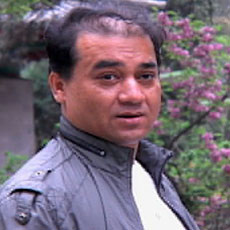
Ilham Tohti. The photograph date has not been independently established.
Biography
Ilham Tohti is a Uyghur economist who taught at Minzu University of China. He founded Uighur Online to discuss social, cultural and policy issues in Xinjiang and encourage exchanges between Uyghurs and Han Chinese.[6][7]
In his 2011 autobiographical essay, Tohti described researching Xinjiang’s social and economic conditions from 1994 and funding his own fieldwork. He also studied sociology, ethnology and Central Asia. Despite restrictions on teaching between 1999 and 2003, he wished to remain in academic life and provide space for exchange between ethnic communities.[8]
Tohti also used Uighur Online to address the situation of Uyghur children trafficked or stranded in inland cities. In his account, the website connected with civic groups to seek assistance and legal support. Unemployment, discrimination and gaps in understanding between ethnic communities were central concerns of his research and public discussion.[8]
In February 2013, he and his daughter were stopped at Beijing Capital Airport. She was allowed to travel to the United States, while he was prevented from leaving. Police detained him at home in Beijing on January 15, 2014, transferred him to Urumqi and formally arrested him on February 25. He received a life sentence for separatism that September.[6][7][4]
In 2019, the European Parliament awarded him the Sakharov Prize for Freedom of Thought. UN Special Procedures sought information on visits and health in 2025; China replied that he was serving his sentence in Xinjiang No. 1 Prison and that his rights were protected.[2][3][4]
Case Summary
Tohti was detained in Beijing on January 15, 2014, transferred to Urumqi and formally arrested on February 25. Trial began on September 17. On September 23, Urumqi Intermediate Court imposed life imprisonment, lifelong deprivation of political rights and confiscation of all property for separatism.[7][6][4]
China’s 2025 reply dates the appeal decision to November 20, 2014, while HRW’s timeline dates its announcement to November 21. A 2025 Special Procedures communication sought information about prolonged lack of visits and health, and China replied that his rights were protected.[4][6][3]
Timeline
1994
Researches Xinjiang’s social and economic conditions
Tohti began researching Xinjiang’s social and economic conditions and conducting fieldwork, as recalled in his 2011 essay.
In his 2011 account, he connected fieldwork with socioeconomic research on unemployment, discrimination and information gaps between ethnic groups, alongside sociology, ethnology and Central Asian studies. This background helps explain the public issues later discussed on Uyghur Online. It is his retrospective account of an academic career, not an admission of subsequent criminal allegations.[8]
1999
Restrictions on teaching, 1999–2003
Tohti recalled these teaching restrictions in his 2011 essay.[8]
2005
Establishes Uighur Online
HRW’s timeline dates the website to late 2005 and describes discussion of Xinjiang society, culture and policies as a platform for exchange.[6]
2011-01
Writes autobiographical essay
The essay reviews research and teaching and discusses interethnic exchange and scholarly responsibility.[8]
2013-02-02
Prevented from leaving at Beijing airport
He and his daughter are stopped at the airport; she is allowed to board for the United States while he is required to remain in Beijing.[6]
2014-01-15
Detained in Beijing home search
2014-09-17
First-instance trial begins
Trial begins at Urumqi Intermediate Court; HRW’s timeline records exclusion of foreign reporters and diplomats.
Human Rights Watch’s chronology records that foreign journalists and diplomats were not admitted; a contemporaneous UK statement expressed concern about a closed trial. A life sentence followed on September 23, with lifelong deprivation of political rights and confiscation of all property. Later government claims about public proceedings and safeguards remain separately attributed pending comparison with the trial record.[6][4][1]
2014-09-23
Life sentence at first instance
2014-11-20
Government records appellate affirmance
2019-10-24
Sakharov Prize announced
The European Parliament announced Tohti as the recipient of the Sakharov Prize for Freedom of Thought and called on China to release him.
The European Parliament recognized his work to foster dialogue between Uyghurs and Han Chinese and called for his release. This records an award and parliamentary position, illustrating international attention to the case. It neither changed the Chinese judgment nor establishes that relatives had access to visits or medical information at that time.[2]
2025-02-28
Special procedures seek visit and health information
The communication reports family exclusion since 2017 and seeks health and care details. Government assurances are recorded separately; independent corroboration remains lacking.[3]
Related Events
Documents
Sources
- [1]
CNHRA-S-140922UK Foreign & Commonwealth Office
Evidence location: Publication date and spokesperson’s statement on Tohti’s academic work and reported life sentence; attributed UK government position.
- [2]
CNHRA-S-213443European Parliament
Evidence location: Award announcement of 24 October 2019 and attributed statement by Parliament’s president.
- [3]
CNHRA-S-721486UN Special Procedures
Evidence location: PDF pp. 1–5; sections on Ding Jiaxi, Gao Zhisheng, Huang Qi and Ilham Tohti; questions to the government.
- [4]
CNHRA-S-188382Government of China / United Nations
Evidence location: PDF cover dated 29 April 2025; sections I.A, I.B, I.D and III.
- [5]
CNHRA-S-808737Wikimedia Commons
Evidence location: File description, creator, licensing section and photograph; webpage dates are not treated as capture dates.
- [6]
CNHRA-S-913452Human Rights Watch
Evidence location: Entries on the website in late 2005, the airport in 2013, and January 15 and September 17, 2014; page includes subsequent updates.
- [7]
CNHRA-S-097075Human Rights Watch
Evidence location: Body: detention on January 15, formal arrest on February 25, 2014, and defense access to case materials.
- [8]
CNHRA-S-776589Ilham Tohti Initiative
Evidence location: Sections 3–4: unemployment, discrimination, Uighur Online and assistance to vulnerable children.