CNHRA PERSON RECORD · CNHRA-P-384107
Ding Zilin
Born
Unknown
Occupation
Philosophy teacher and bereaved-families advocate
Role
Human Rights Defender
Record ID
CNHRA-P-384107
Visual Records
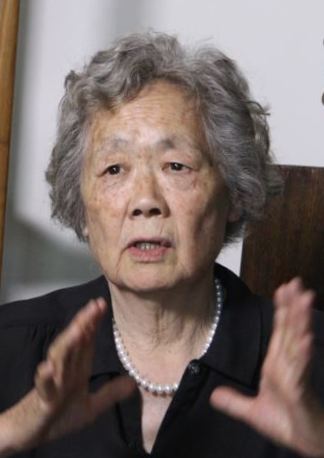
Ding Zilin during an interview. The photograph date has not been independently established.
Biography
Ding Zilin, a former associate professor of philosophy at Renmin University of China, is a founding member of the Tiananmen Mothers. Her seventeen-year-old son Jiang Jielian died after leaving home on June 3, 1989. Her testimony describes his shooting near Muxidi and the family’s search and discovery of his death.[2][1]
In 1989, she began connecting with other bereaved families. Through visits and interviews, they recorded names, places of death and family experiences in writing and on video. The Tiananmen Mothers continued seeking truth, accountability, compensation and dialogue with the government.[3][5][8]
Ding recalled submitting a written statement to the UN Commission on Human Rights in 1993, listing 48 people killed. With friends’ help, she published an account of her search in 1994, identifying 96 dead and 49 injured. The successive lists record the expanding reach of her investigations.[8]
In a 1999 essay, Ding recalled following leads with Zhang Xianling to find bereaved families. They recorded names, ages, occupations, places and circumstances of death, and family situations. She reported documenting 155 people by then, seeking identifiable witnesses behind each account.[8]
Alongside documentation and public letters, families have provided mutual and humanitarian support. In February 2025, Human Rights in China reported on a letter from Ding emphasizing the group’s autonomy and describing restrictions on international calls to her mobile and home phones.[5][6]
Some members of the Tiananmen Mothers gathered again on December 28, 2024. Their subsequent statement described visits to frail members, mutual care and efforts to find other bereaved families. Age and illness had made meetings and visits increasingly difficult.[7]
Case Summary
According to Ding’s testimony, Jiang Jielian was fatally shot near Muxidi in Beijing on the evening of June 3, 1989. She subsequently sought other families and documented victims’ identities, deaths and family experiences, developing the Tiananmen Mothers’ documentation work.[2][3][5]
Public letters have sought truth, accountability, compensation and dialogue. The collected material includes family interviews, videos and visit records. In her 2025 letter, Ding described continuing communication restrictions and thanked supporters for respecting the group’s autonomy.[5][6]
Timeline
1989
Connects with other bereaved families
1989-06-03
Son Jiang Jielian killed
1993-06
Submits a written statement listing victims
She recalled being prevented from travelling to Geneva but submitting a statement naming 48 dead.
Her later account says the submission made public the names of 48 victims documented by that stage. The work involved following leads, speaking with relatives and checking individual histories. The figure describes the scope of that collection, rather than the total number killed in 1989.[8]
1995
Begins sustained public letters seeking dialogue
HRIC’s feature dates sustained public letters to government leaders seeking dialogue, truth and accountability to 1995.[5]
1999-01-31
Testimony concerning Jiang Jielian published
Ding’s published testimony describes Jiang Jielian leaving home on the evening of June 3, 1989, being shot near Muxidi, and the family’s search for him.[2]
1999-01-31
Publishes account of ten years of documentation
Ding recalled finding bereaved families and checking victims’ details with Zhang Xianling, reporting 155 people documented by that time.
The retrospective explains how she and Zhang Xianling visited families and recorded names, ages, occupations, places and circumstances of death, and family situations. Its list of 155 victims represents the cases accumulated by that stage: an expanding body of individual documentation, rather than a completed overall count.[8]
2014-07-25
English remembrance published
HRIC published Part 4, identified as an edited translation.[1]
2025-02-10
HRIC reports on her letter
HRIC published an account of Ding’s letter thanking supporters for respecting the group’s autonomy and describing restrictions on international calls.
The letter discussed by Human Rights in China addresses restrictions on international calls to her mobile and home telephones and stresses the Tiananmen Mothers’ independence. It records her account of communication and the group’s work at that time; mutual care, visits and efforts to find other families remained part of its activities alongside public letters.[6]
Related Events
Documents
Sources
- [1]
CNHRA-S-048666Human Rights in China
Evidence location: Byline and date; edited HRIC translation, Part 4, concerning Jiang Jielian and Ding’s remembrance.
- [2]
CNHRA-S-191271Human Rights in China / Ding Zilin
Evidence location: Biographical introduction and attributed testimony by Jiang Jielian’s mother.
- [3]
CNHRA-S-256224Human Rights in China
Evidence location: Who is Ding Zilin? and Who are the Tiananmen Mothers?
- [4]
CNHRA-S-097492Wikimedia Commons
Evidence location: File description, creator, licensing section and photograph; webpage dates are not treated as capture dates.
- [5]
CNHRA-S-286740Human Rights in China
Evidence location: Tiananmen Mothers section: interviews, videos, visit records and public letters since 1995.
- [6]
CNHRA-S-416612Human Rights in China
Evidence location: Body paragraphs 1 and 6–7: reply, group autonomy and reported restrictions on international calls.
- [7]
CNHRA-S-913115Human Rights in China
Evidence location: Statement dated January 4, 2025, concerning the December 28, 2024 gathering.
- [8]
CNHRA-S-046780Human Rights in China
Evidence location: Part I: 1993 written statement, 1994 book and successive victim lists.