CNHRA PERSON RECORD · CNHRA-P-097514
Ai Weiwei
Visual Records
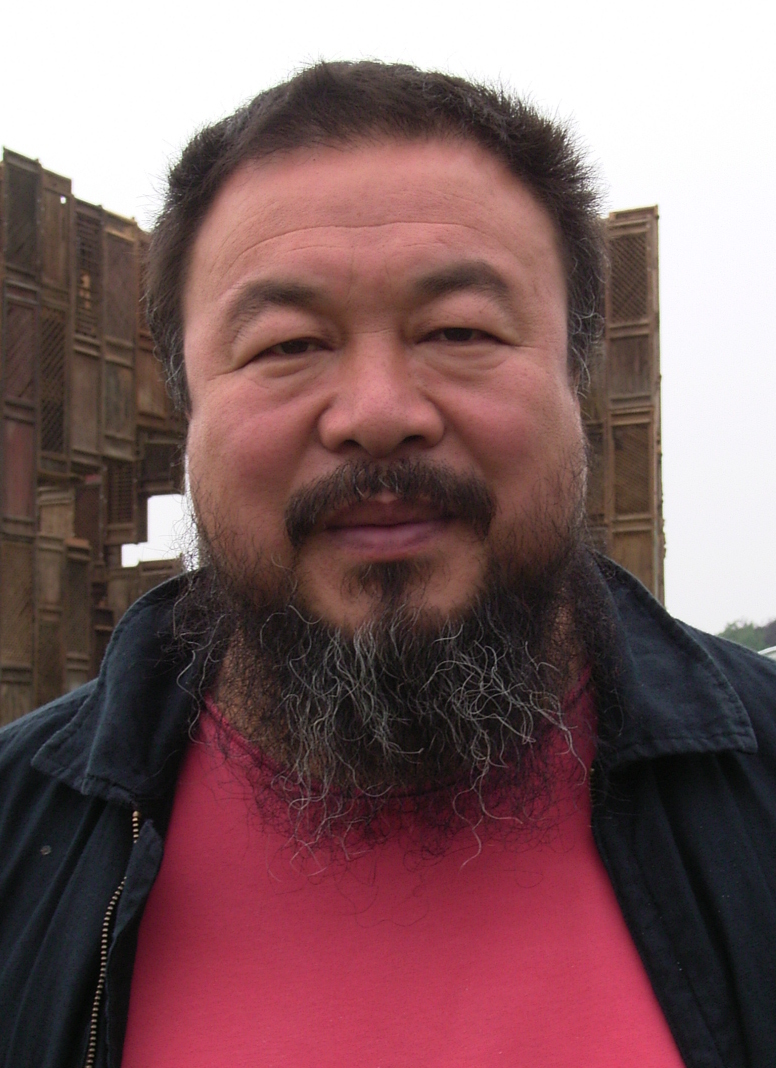
Ai Weiwei during documenta 12 in Kassel in 2007.
Biography
Born in Beijing in 1957 to Ai Qing and Gao Ying, Ai Weiwei is an artist, documentary filmmaker and participant in public affairs. He spent his childhood with his family in northeastern China and Xinjiang following his father’s political persecution. This family history provides context for his sustained interest in individual dignity, power and exile.[4][5]
He entered the Beijing Film Academy to study animation in 1978 and participated in the Stars art collective’s exhibitions the following year. He moved to the United States in 1981 and later lived in New York, exploring conceptual art, readymades and photography. After returning to Beijing in 1993, he worked on art publications, exhibitions and studio spaces, and later served as artistic consultant for the Olympic National Stadium, the Bird’s Nest.[4][5]
After the 2008 Sichuan earthquake, Ai recruited volunteers through his blog for a citizens’ investigation into student deaths, gathering names and school information while seeking disclosure about casualties and collapsed school buildings. The investigation restored individual identities behind casualty figures; compiling, publishing and commemorating the names linked his public action with his art.[4][3]
Materials and methods of production also carry public meaning in his work. Straight uses reinforcing steel recovered from earthquake rubble and straightened by hand to commemorate students who died. Sunflower Seeds, exhibited in London in 2010, consists of vast numbers of porcelain seeds individually made and painted by Jingdezhen artisans, bringing individual difference, collective imagery and labor into the same space.[4]
His 81 days in secret detention in 2011 subsequently entered his art. S.A.C.R.E.D., shown in Venice in 2013, reconstructs daily life under surveillance through six scenes. The 2014 Alcatraz exhibition broadened its focus to prisoners and exiles worldwide, using brick-built portraits, sound and prison spaces to examine the loss of liberty. Still unable to leave China, Ai participated remotely in producing the exhibition.[4][2]
After his passport was returned in 2015, Ai resumed foreign travel and established a Berlin studio, continuing to connect experiences of displacement with refugees’ lives. Laundromat preserves clothes left behind after the clearing of the Idomeni refugee camp in Greece through washing, repair, ironing and itemized recording. His 2017 documentary Human Flow follows displaced people through camps, sea crossings, borders and personal encounters.[6][4][5][7]
His practice extends beyond exhibitions to blogs, social media, documentary and writing. The memoir 1000 Years of Joys and Sorrows appeared in 2021, bringing his father’s experiences together with his own upbringing and public life. His recurring attention to names, clothes, bodily experience and ordinary objects centers on how individuals are remembered, express themselves and retain dignity.[5]
Case Summary
Ai was beaten by police and prevented from testifying for Tan Zuoren in Chengdu in 2009, undergoing emergency brain surgery about a month later. In 2011 he was taken at Beijing airport and held secretly for 81 days without counsel.[3][4][2]
After bail, passport and exit restrictions continued affecting work and family reunions. He transformed detention experiences into works including S.A.C.R.E.D. and organized the Alcatraz exhibition remotely. Return of his passport in July 2015 allowed travel and reunion with his family in Germany.[4][2][6]
Timeline
1978
Enters the Beijing Film Academy
Ai entered the Beijing Film Academy to study animation. The following year he participated in the Stars collective’s exhibitions, joining artistic exchanges outside the official art establishment.[4]
1979
Participates in the Stars art collective
The Stars collective exhibited in Beijing, seeking public space for individual artistic expression beyond official exhibition structures. Ai’s participation placed artistic freedom within his early practice.[4]
1981
Moves to the United States
Ai moved to the United States and later lived in New York, encountering conceptual art and readymade practices through study, photography, exhibitions and artistic exchanges. He returned to China in 1993.[4]
1993
Returns to Beijing and contemporary art work
Ai returned to Beijing as his father was ill. He subsequently worked on art publications, exhibitions and studio spaces, combining traditional materials and everyday objects with contemporary ideas.[4]
2008-12
Launches a citizens’ investigation into student deaths
Following the Sichuan earthquake, Ai used his blog to initiate a citizens’ investigation, recruiting volunteers to document students’ names, schools and family information and seek disclosure about school collapses and casualties.[4]
2009-05
Publishes names of students killed
2009-08
Beaten and prevented from testifying in Chengdu
2009-09
Undergoes brain surgery in Munich
2010-10-12
Sunflower Seeds opens in London
Around 100 million handmade and hand-painted porcelain seeds filled the installation, produced with about 1,600 Jingdezhen artisans. Their individual differences within an apparently uniform expanse brought the individual, the collective and labor into close view.[4]
2011-01-11
Shanghai studio demolished
Ai’s Malu studio in Shanghai was demolished after local authorities had invited its construction and later declared it improperly permitted. He retained fragments of the building and subsequently used them in Souvenir from Shanghai.[4]
2011-04-03
Taken away at Beijing airport
Ai was taken at Beijing airport before a Hong Kong flight and held at an undisclosed location without counsel. Authorities invoked tax-related allegations amid demands for whereabouts and legal grounds.[2]
2011-06-22
Released on bail after 81 days
2012
Straight commemorates students with straightened rebar
Developed between 2008 and 2012, Straight uses around 150 tonnes of reinforcing steel recovered from earthquake rubble and straightened by hand, arranged in waves to commemorate students who died.[4]
2013-05
S.A.C.R.E.D. presents scenes of detention
Six large dioramas shown in Venice reconstructed daily life under close guard during Ai’s 2011 secret detention, including eating, sleeping and washing. Still unable to leave China, he could not attend.[4]
2014-09-27
Alcatraz exhibition opens
The exhibition used the former prison to explore confinement and liberty. Trace assembled brick portraits of 176 prisoners and exiles, alongside installations using sound and architectural space. Unable to travel abroad, Ai worked on the exhibition remotely.[4]
2015-07-22
Passport returned, enabling foreign travel
Ai’s passport was returned after about four years, marking a turning point in foreign travel restrictions following his 2011 detention. He could arrange family visits, overseas work and personal attendance at exhibitions.[6]
2015-07-30
Travels to Germany to reunite with family
After his passport was returned, Ai arrived in Munich to reunite with his family. He established a studio in Berlin that year as international travel and work resumed.[4]
2016
Laundromat preserves traces of refugees’ lives
After the Idomeni camp in Greece was cleared, Ai collected abandoned clothing, taking it to Berlin to wash, repair, iron and catalogue item by item. The clothes and shoes preserved traces of people forced to move.[5]
2017
Human Flow documents forced displacement
Ai’s documentary Human Flow moves through refugee camps, sea crossings and borders, combining expansive images, smartphone footage and individual encounters to connect mass displacement with particular lives.[7]
2021
Publishes 1000 Years of Joys and Sorrows
The memoir connects his father Ai Qing’s experiences with Ai’s own upbringing, art and public action, using personal and family memory to examine how political campaigns and displacement shaped their lives.[5]
Related Events
Sources
- [1]
CNHRA-S-775115Wikimedia Commons
Evidence location: File description, source, creator and licensing sections.
- [2]
CNHRA-S-649933Human Rights Watch
Evidence location: Artist’s work; April 3, 2011 detention, eighty-one days in secret custody and travel restrictions. Reference notes: June 22, 2011 records bail after 81 days, not sentence completion. Travel restrictions in the 2014 account should be read with the 2015 passport-return record.
- [3]
CNHRA-S-809513Human Rights Watch
Evidence location: Passages on the Sichuan earthquake student investigation, the August 2009 police beating and subsequent brain surgery.; Additional locator: 2009-09 — Undergoes brain surgery.
- [4]
CNHRA-S-626958Fondazione Palazzo Strozzi
Evidence location: PDF pp. 21–27, “Timeline / Ai Weiwei Story”; pp. 9–14, exhibition walkthrough.
- [5]
CNHRA-S-470942National Museum of Modern and Contemporary Art, Korea
Evidence location: PDF pp. 2–4: Laundromat, freedom of expression, memoir and artist biography.
- [6]
CNHRA-S-699738Lisson Gallery
Evidence location: News dated July 22, 2015: passport returned after restrictions on foreign travel.
- [7]
CNHRA-S-850837International Documentary Film Festival Amsterdam
Evidence location: Film year, directing credit and synopsis; differing country counts in production accounts are not used.